Engage Aotearoa

Dr Gwyn Lewis: a modern understanding of arthritis

18th April University of Auckland, 10.00 – 11.00

Presenter Dr Gwyn Lewis:  Gwyn’s presentation will focus on a modern understanding of arthritis related pain, avoiding pain pitfalls and future directions in the treatment of arthritis related pain.

Associate Professor Gwyn Lewis is a neurophysiologist based at AUT University’s North Shore Campus in Auckland. She obtained a PhD in motor control from the University of Auckland in 2003. Gwyn had an extended post-doctoral experience undertaking research in motor control, rehabilitation and neurophysiology at the Rehabilitation Institute of Chicago. She currently spends half her time teaching in AUT’s physiotherapy programme and the other half undertaking pain research in the Health and Rehabilitation Research Institute. Most of her research is in pain neurophysiology and how it relates to persistent pain development, pain modulation pathways, and the cognitive factors and psychosocial influences affecting pain.

Contact: Carol Lovatt, Northern Regional Administrator, Arthritis New Zealand, Kaiponapona Aotearoa
Ph: 09 523 8900
Email:  carol.lovatt@arthritis.org.nz
Support the person in your family who has arthritis.
Phone 0900 33320 OR Donate via our website www.arthritis.org.nz

Submitting Information to the Engage Blog

VoiceBoxMEgaphoneYou are welcome to send information about any mental-health recovery related news and events, whether it’s some new research, a consultation process, a new service, a support group, a social activity or a workshop. From time-to-time we will also publish guest feature articles and opinion pieces. To include your notice in the Blog, please send the following information, in the main body of an email with any related images or documents attached to EngageAotearoa@gmail.com.

What to Send

Title:  Your Headline Like This.
Description/Information: Please use third person when describing your events and activities to make the source of the information clear (i.e. avoid using ‘I’, ‘we’, ‘us’, ‘my’ or ‘our’ unless it is part of a quote or an opinion piece). Have a look at some existing posts if you are unsure.
Date/Time:
Location/Address:
Contact Details: Organisation/Group, Person, Email, Phone Number.
Link for Further Information:  Facebook page, website etc

You may want to include images or attachments in your post.

  • Poster/Flyer/Logo Images: jpeg or GIF format, file-size of 200 KB or less
  • Attachments: pdf or doc format, file-size of 1 MB or less

Submit your items at least one month before you need them to be published online.

Canterbury Mental Health Directory and Guide

Engage Aotearoa recommends the Canterbury Mental Health Directory as a great place to start if you would like to seek help with an emotional, relational or mental health issue. It lists a number of support groups in Canterbury.

If you are asking yourself questions like these: “What sort of help do I need? Who should I go to? What will it cost? How private will it be? Will I have to wait?” this directory attempts to answer these and other questions in understandable language and with your best interests at heart. The directory can be found here. (Note from Engage: You could also try out our Community Resources Directory, which has some South Island entries.)

The website also features a superb guide for starting out seeking help, found here.

No. 159: Mindful Drawing

This week, to attain, maintain or regain your sense of wellbeing... 

...practice being mindful by taking a few moments a day to sit and draw something you see.  Drawing can teach us "to notice properly rather than gaze absentmindedly" (The Book of Life), it doesn't have to be about artistic ability at all. The aim can be simply to notice properly the parts of things and how they fit together. This makes it a good way to strengthen our mindfulness muscles. Your drawings could be simple scribbles in pencil or ballpoint pen. If you notice you get too caught up with trying to draw a 'good' or accurate picture, do the exercise without looking at the paper at all - it really matters that little what you actually put down on the paper.

It's never easy to start a new practice, you might need to schedule in some time to do this each day and organise yourself some basic materials to have on hand. You could snatch a moment at lunchtime or you could plan a little trip to somewhere you might enjoy noticing in more detail.

Sitting down to draw, take a moment to settle into stillness and allow your breath to fall into its natural rhythm. Sometimes concentrating on drawing can lead us to hold our breath - this isn't a breathing exercise, but it's still important to breathe. Allow your eyes to wander until they settle on a scene or object to draw. For the next few moments, simply draw what you see, however it comes out. As your mind wanders, just notice your thoughts and bring yourself back to what you are drawing. As you notice your thinking mind judge the 'goodness' of what you are drawing, use your watching mind to observe the thoughts and bring your attention back to the detail you see around you and continue with the task of drawing it.

As you move through the week, experiment with drawing in different locations and drawing different things and observe how focusing on these different things effects your thoughts and feelings.  What is beautiful and soothing to you? What is energising and inspiring for you to see? What sights and scenes weigh you down? How does your body respond to this? Always coming back to your watching self and the act of marking down what you see.

Practicing mindful drawing could help you ground yourself in the present moment during times of stress and distress. It can be a useful way to learn mindfulness when it is hard to do breathing or visualisation-based exercises, or if mindfulness is an unfamiliar practice. Really, mindfulness just means paying attention to the present moment, this involves using the part of our mind that is aware of our thoughts (our 'watching mind' or 'observing mind') instead of being totally involved in the part of our mind that is doing the thinking (our 'thinking mind'). Other names for our watching mind are our 'Observing Self' (in ACT) or 'Wise Mind' (in DBT). In DBT our 'thinking mind' is broken down into our 'feeling mind' and our 'rational mind', because we really do have lots of different kinds of thoughts running through our brains at any point in time.

Once you are comfortable doing mindful drawing in ordinary moments, add Mindful Drawing to your Personal Coping Kete as a way of coping with stress and distress. Mindful drawing could take you out of your thoughts for a moment, allow your body a chance to calm down, and give you something neutral or positive to focus on for a while, which could give you a tiny injection of positive vibes when things are feeling chaotic or overwhelming. You could also use the exercise as an excuse to take yourself somewhere you might enjoy. Giving yourself pleasurable experiences is an important part of engaging with a life you feel is worth living.

No. 158: Plant Seeds and Nurture Them

This week, to attain, maintain or regain your sense of wellbeing…
… practice being aware of your valued actions by visualising or symbolically planting seeds for each of your valued intentions. It is New Years Eve and that is good time to set goals for the coming months, but goals tend to be short-lived and easily side-tracked by shifting priorities. On the other hand, our values represent how we want to be in the world, regardless of the state of our goals. Values are always in progress, whereas goals can be achieved, failed or finished with. A goal might be to ‘ Quit Smoking’ . A value might be ‘ Caring for my Physical Health.’ See the shift? A goal is a place on a map, but a value is a direction on the compass we use to guide us. Different values tend to take on differing levels of importance as we move through life. Much of the suffering we go through is the result of being distant from our values, or prioritising one set of values over things we also hold dear to our hearts. So this week, try doing a ‘ Seed Planting Ceremony’ for the New Year, or the day or week ahead.
First, take a moment to sit in stillness and bring your mind to what you want to nurture in your life. How do you want to treat yourself, the planet and others in the coming months? What is most important to you right now? When your mind throws up thoughts of what you don’ t want, name it to yourself and bring your awareness to the values you would like to be guided by in such situations. What do you want to stand for as a person? What brings vitality and meaning to life for you? Write everything down as you go, then read back through and pick out the things that are priorities for you at the moment.
Next, make ‘ paper seeds’ for each of values you want to ‘ plant’ and nurture in your life by writing each one down or drawing them on a separate piece of paper. Give a name to each of the ‘ seeds’ you are planting so you can easily bring it to mind when you need help to find a valued path forward. Choose a small object or picture for each of the important ‘ seeds’ too if you would like. Next reflect on what you are doing, have done, or would do when living fully in line with this value that is so important to you? What small actions will grow it? Write these down too and then place the paper and the object in a special jar or container. Try to create at least one different ‘ seed’ for each of the areas of your life that are important to your health and wellbeing.
As you learn more about what you value in your heart of hearts, you can return and create more paper ‘ seeds’ to grow. Take some time once a day to turn your mind to the ‘ seeds’ you ‘ planted’ . Pick a few out of the jar, reflect on the ways you have moved towards it that day, acknowledge the things that have pulled you away with compassion, and visualise yourself nurturing this in yourself tomorrow. As you move through each day, see if you can practice bringing your attention to these valued directions, by naming them to yourself as a reminder and seeing how they can guide your next steps.
Once you are comfortable with setting your intentions by naming and visualising the values you want to nurture, add ‘ Plant Seeds and Nurture Them’ to your Personal Coping Kete. Then in times of stress and distress, you’ ll be able to returning to your values as helpers and visualise how you want to move forward, given what you have got.When you notice myself feeling lost or confused or distressed or uncertain, pause, find a valued direction, and choose one workable step towards it.


Engage Facebook Highlights

Here are a half a dozen recent highlights from our Facebook page. Please LIKE US!

Nuggets
Kiwi tastes a golden nugget. It’s delicious. Superb animated film about addiction.

Writing from the Toi Ora Creative Writers in the ArtWeek zine
Toi Ora writers make a splash: writing from Matthew Savage, Liz Higgins, Andrew Holdaway and more.

Nine Things Every Parent with an Anxious Child Should Try
Your child turns to you and says, “I don’t want to take the bus. My stomach hurts. Please don’t make me go.” A discussion

Public lecture by Professor Rosalind Gill: Sexting, sexualisation and sexism
Modern youth sexuality, sexting and the sexy selfie. 27 November 2014, 6pm.

Finding the Treatment Options that Suck Less
The Crazymeds Manifesto: to help you find treatment options that suck less.

Worst Things to Say to a Person With Bipolar Disorder
When your friend or loved one has bipolar disorder, here are the worst things you can tell them.

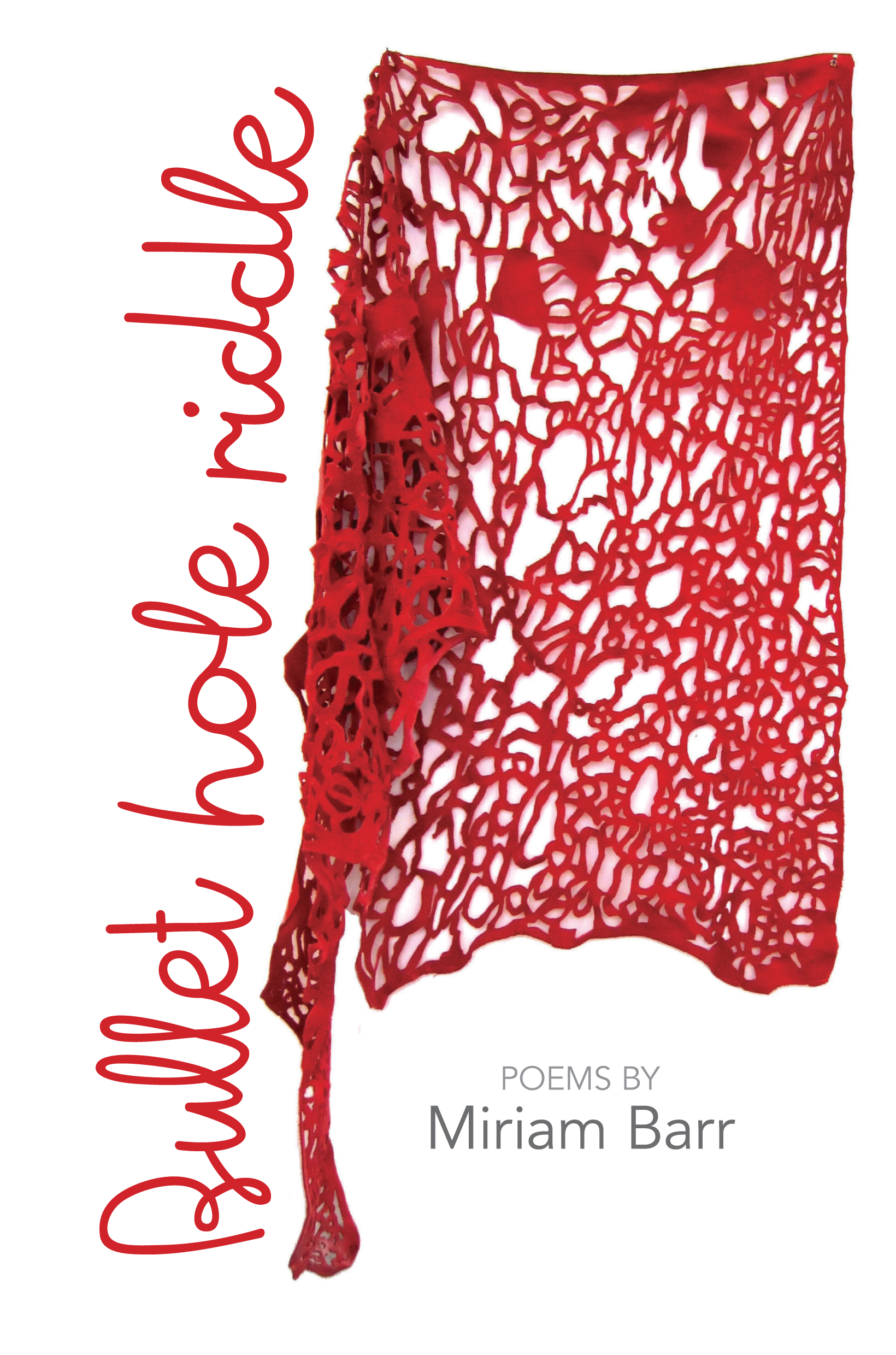
New Poetry Book Charts Trauma Recovery Journey

Engage Aotearoa’s service director can most often be found sharing other people’s recovery stories and experiences. But in her spare time she is a poet, and writing under her maiden name, Miriam Barr, she recently had her first major collection of poetry published by Steele Roberts Aotearoa, one of New Zealand’s leading publishers of home-grown poetry.

Bullet-hole-riddle-FRONTcoverThe book features cover art by Elke Finkenauer and interior art from Andrew Blythe‘s untitled ‘No’ series. The back-cover reads, “Bullet Hole Riddle is a three-part narrative sequence charting one person’s journey to make sense of an unwanted history. Framing personal experience as a series of collective acts, Miriam Barr’s first major collection of poetry tells a story about the human psyche and the spaces between us.”

Those familiar with Engage Aotearoa will know what Miriam means when she comments on the Engage Facebook page, “I guess this [Bullet Hole Riddle] is kinda like my Butterfly Diaries story in a way. In poetry form.”

An Auckland Women’s Centre article by Sabrina Muck goes on to say, “Tied into the overall message of the book, it is worth noting its dedication, which tells us this is for the untold stories. Speaking with Miriam in the week following the announcement of the Roastbusters outcome, she felt this was particularly relevant in light of the young women’s experiences in that case, and the voices of too many survivors which continue to go unheard. Steele Roberts is to be commended for supporting this book on its journey and bringing Miriam’s voice into the public sphere.”

The CMHRT Board of Trustees and the volunteer team at Engage Aotearoa would like to congratulate Miriam for her poetic achievement and wish her all the best for Bullet Hole Riddle’s journey into the world.

Bullet Hole Riddle can be ordered online at www.steeleroberts.co.nz or from your local bookseller. Copies are available to borrow at Auckland City Libraries and the Auckland Women’s Centre Library. Check out reader reviews and share your own at GoodReads.com. Find out more about the book at www.miriambarr.com/bulletholeriddle.

Te Pou: Peer support competencies ‘sandstone to sharpen practice on’

The following is a press release from Te Pou, from their website:

The resource Competencies for the mental health and addiction service user, consumer and peer workforce were launched on November 11 at Te Pou in Auckland.

Dr John Crawshaw, director of mental health, gave an opening address to the mental health and addiction sector people from across the North Island. He acknowledged the pivotal role the service user, consumer and peer workforce has in informing service development and working alongside clinical services, supporting people to self manage and drive their own recovery.

Dr Crawshaw was followed by two peer support workers who spoke about their experience and what peer work meant for them. Elton Hakopa, addiction peer support worker from the drug court, gave a stirring and entertaining outline of his experiences. Elton gave the quote of the day, or even the year when he said “these competencies are the sandstone I will sharpen my practice on”.

Ahmad Al-Ali, mental health peer worker from Mind and Body, also entertained the crowd with his self-deprecating wit and story of courage. Both exemplified the state of gratitude they were in to be able to use their powerful experiences to support other people’s self-determination and wellbeing.

Robyn Shearer, Te Pou chief executive, talked about the power of people from across mental health and addiction co-designing and co-developing the competencies.

Two documents created to support the competency framework were also launched: The Service user, consumer and peer workforce guide for managers and employers and the Service user, consumer and peer workforce guide for planners and funders. These are available to download alongside the competencies. These documents provide information and sound direction for people managing and employing peer workforce members and for planners and funders investing in this exciting growth area in the mental health and addiction workforce.

To contact Te Pou or for further information:

http://www.tepou.co.nz/

Email: info@tepou.co.nz

Te Pou phone numbers online here.

Psychosis: latest articles on Taylor & Francis Online

The following are some highlights from the latest Taylor and Francis “Psychosis” online releases.

Overcoming distressing voices
Katherine Berry

Understanding the development of narrative insight in early psychosis: A qualitative approach
Eric Macnaughton, Sam Sheps, Jim Frankish & Dave Irwin

Is the content of persecutory delusions relevant to self-esteem?
Johanna Sundag, Tania M. Lincoln, Maike M. Hartmann & Steffen Moritz

Childhood sexual abuse moderates the relationship of self-reflectivity with increased emotional distress in schizophrenia
Bethany L. Leonhardt, Jay A. Hamm, Elizabeth A. Belanger & Paul H. Lysaker

Opinion piece: “Hearing the voices of young people!” Do we require more personal accounts from young people who have psychotic-like experiences?
Patrick Welsh & Roz Oates

For the Psychosis list of issues click here.

IIMHL New Zealand Special Update

The following links are a summary of the IIMHL AND IIDL UPDATE – 15 NOVEMBER 2014

If you want further information on the IIMHL organisation go here. To sign up for their mailing list go here.

For general enquiries about these links or for other IIMHL information please contact Erin Geaney at erin@iimhl.com.

  1. The Physical Health of People with a Serious Mental Illness and/or Addiction: An evidence review
  2. Stories of Success
  3. Tihei Mauri Ora: Supporting whānau through suicidal distress
  4. New ‘wellbeing bank’ for baby boomers
  5. “There is always someone worse off…” (regarding the earthquakes in Christchurch)
  6. Debriefing following seclusion and restraint: A summary of relevant literature
  7. Families and whānau status report 2014: Towards measuring the wellbeing of families and whānau
  8. Growing Up in New Zealand: Vulnerability Report 1: Exploring the Definition of Vulnerability for Children in their First 1000 Days (July 2014)
  9. Parents or caregivers of children with a disability have a voice in New Zealand (video playlist)

Also recommended in the update are:

Effective parenting programmes: A review of the effectiveness of parenting programmes for parents of vulnerable children
(2014, April 14). Wellington: Families Commission

New Zealand practice guidelines for opioid substitution treatment
(2014, April). Wellington: Ministry of Health