With all that is going on the world at the moment, there is a lot of talk about the benefits of mindfulness as a way to cope and heaps of useful tips being shared online. But learning mindfulness can be tricky, especially when we have trauma or psychosis on board, and some adaptations are often needed. So I thought I’d dig up a bit of information to share and came across this article on Psychology Today which sums it up nicely.
“While there is strong scientific evidence to support the use of mindfulness for emotional and psychological healing, it is also important to recognize how these practices can lead to increased distress. For those with unresolved trauma, the practice of mindfulness can be approached carefully and thoughtfully to minimize the likelihood of negative outcomes. […] For some, intentionally engaging in the experience of “being present” with thoughts, feelings, and bodily sensations can lead to a resurfacing of unresolved, or even undiscovered, issues and feelings. […] At times, being mindful can leave a survivor feeling like they are trapped or helpless again.” Read more about trauma-informed mindfulness here: http://www.psychologytoday.com/nz/blog/choosing-your-meditation-style/202006/trauma-informed-mindfulness
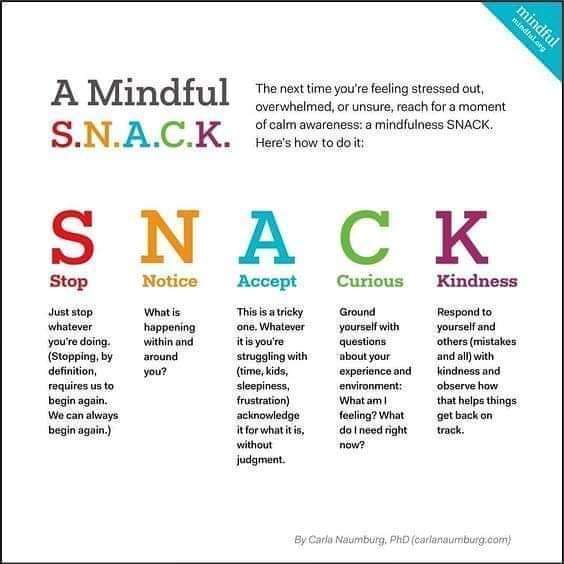
If you find doing exercises like the Mindful SNACK difficult, this article might help explain why. Know that it’s normal if you’ve got distressing experiences going on inside. Go gently with yourself. Many people find it helpful to start practising for very short times, with things that are outside of them like the view, an object or a piece of music, or while doing something, like walking, eating, drinking a cuppa, or stretching.
 … practice holding onto good memories by making and using a Memory Jar. To make a Memory Jar, all you need to do is get a jar with a lid that you can fill with reminders of your positive, special or treasured memories throughout the year. Each day, write down at least one positive thing you want to remember later. Write down the small things like amazing views or scenery you have seen or fabulous food you have eaten or moments of laughter with friends as well as the big events and achievements that happen throughout the days and weeks of the year. Some people add objects and pictures to their memory jars too – like ticket stubs from good movies and concerts, photos of friends, shells from beach trips, dried flowers etc etc. Your Memory Jar can become a real lucky dip of treasured moments that you will be able to use as fuel for feeling good in days to come. To start with, you’ ll need to get your Memory Jar ready.