Engage Aotearoa

Te Whetu Tawera Gets a Makeover

TeWhetuMural_Flox_2013

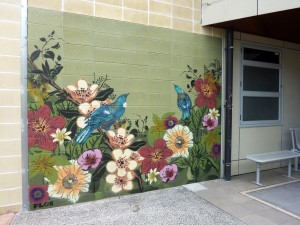
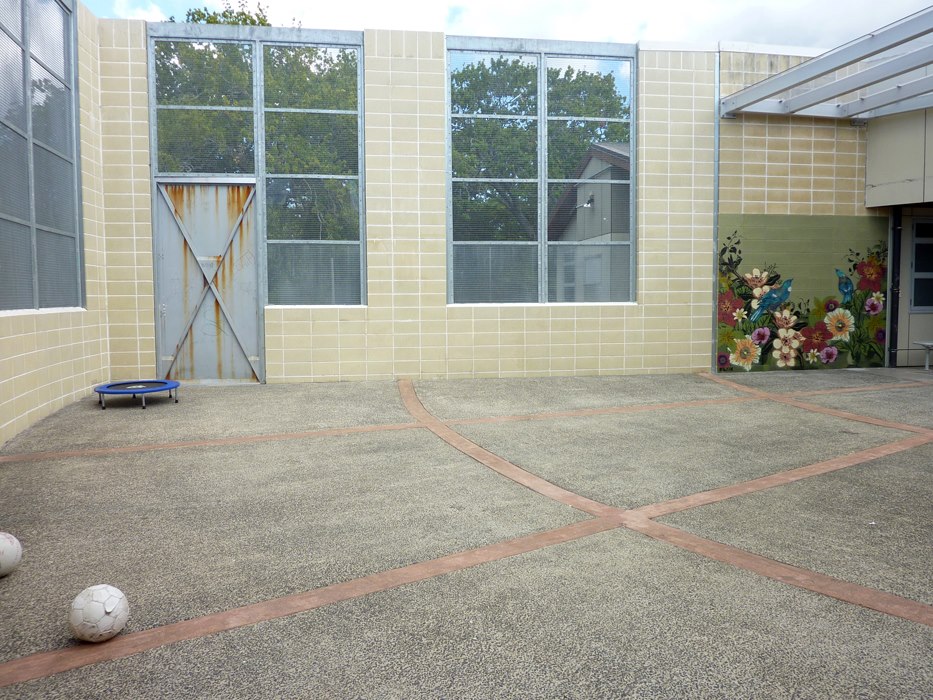
Artist and designer ‘Flox’ gave Auckland central’s acute mental-health service a makeover on the 12th of March. She spent the day “behind lock and key” painting a huge mural on one of the walls in the outdoor courtyard in the secure ward at Te Whetu Tawera.

The photos Flox posted on her Facebook page have been generating such a positive response. 

The courtyard has long been described by service-users as prison-like in atmosphere. Engage Aotearoa applauds the ADHB in this effort to create a friendlier physical space and Flox for making it happen. 

Hopefully this will become just the beginning of more initiatives of this kind. It would be especially cool to see the people using the service encouraged to get involved in creating the space too, maybe under the direction of an artist with a brief like Flox. Next stop – that big rusty steel door.

Click here to view photos of the work in progress.

TeWhetuMural_Courtyard_Flox_2013

E-Book: How to Make the Most out of Your Therapy

How to Make the Most out of Your Therapy: A Guide for Clients receiving Talking Therapies from Psychologists, Counsellors and other Mental Health Professionals
An e-book by Tim Kilgour – clinical psychologist and fiction writer.

What is this e-book about? 

This easy to read guide is a relatively brief summary about how to make the most of your psychotherapy. It is designed for people who are planning to enter into a talking-based therapy with mental health professionals (e.g. psychologist, counsellor or other professional therapist). It outlines some ideas to help prepare for the therapeutic experience, outlines what the client may typically expect in early sessions, describes aspects of the therapeutic relationship, outlines helpful (and not so helpful) attitudes that a client may bring to enhance their progress, describes the purpose of homework, explains the value of others in the therapeutic setting, describes the closing stage of treatment, and gives tips on how to cope if therapy goes wrong. This text is designed to give you, the client, a “head start” in your therapeutic relationship to increase the likelihood of you having a useful experience and make the most of your “treatment dollar”.

The text will also assist psychologists and counsellors in preparing, managing and enhancing the experience of their clients prior to and during the therapeutic experience.

This text is published as an e-book at the following link:
http://www.amazon.com/Make-Most-Your-Therapy-ebook/dp/B006WW9L2S

Radio Interview Available Online | Teenage Self-Harm: Behind the Scars

At 8:12 am on Sunday 3 February Radio NZ broadcast a special interview, Insight: Teenage self harm – behind the scars

Research shows up to half of Wellington teenagers have engaged in some sort of self injurious behaviour by the time they are 18 and GPs and guidance counsellors report a spike in such behaviour  among teens in post quake Christchurch. For parents the revelation their child has deliberately self-harmed, often in the solitary secrecy of their bedroom at home using simple household objects is a profound shock.  Radio New Zealand’s Sally Round talks to young people who have engaged in this form of self harm as well as those caring for them and in this interview asks whether enough is being done to build resilience among New Zealand’s youth.

Missed it? No worries – Listen to the Interview Anytime on the SPINZ website!

Cool to Korero Kaitaia Trip a Success

Mike King of The Key to Life Charitable Trust and The Nutters Club traveled to Kaitaia with Engage Aotearoa from the 4th to the 6th of March to throw solutions at suicide and help encourage people to talk more.

After a powhiri at Te Runanga o te Rarawa, major sponsors of the initiative, the pair visited Taipa Area School and presented Its Cool to Korero to 150 senior school students and community members.

That evening, over 90 members of the Far North community attended Mike King’s Community Korero, where Mike and Miriam fielded questions from the crowd and got everyone talking about how they can make a difference or get through themselves.

The next day, all 800+ students at Kaitaia College and 60 students from neighbouring Aniwaniwa College took part in the Cool to Korero talk, split across two, packed-to-capacity 2-hour sessions in the school hall. Mike’s presentation had participants laughing their way into this sensitive subject and inspired to do more.

At each seminar, the audience was asked to stand if they ‘would do anything they could to stop one person from committing suicide.’ Picture entire rooms of hundreds standing to show their support.

Each school session provided an opportunity for students to have one-on-one time with Mike and/or Miriam and over 20 students were able to come forward to seek support. Take-away resources were available on Bullying, Heartbreak, Depression, Alcohol and Drugs, Suicide, Mental-Health Problems, Recovery, Community Resources and more.
PamapuriaPrimarySchool

Each school was left with a stack of Skylight teacher resources and library books including It Happened to Me: A Teen’s Guide to Overcoming Sexual Abuse; The Anger Toolbox; Something Has Happened Activity Book for Children; The Tough Stuff Activity Book for Children; A Terrible Thing Happened storybook for Children; Creative Coping Skills for Children; Bully Blocking and Emotional Support through Arts and Crafts Activities.

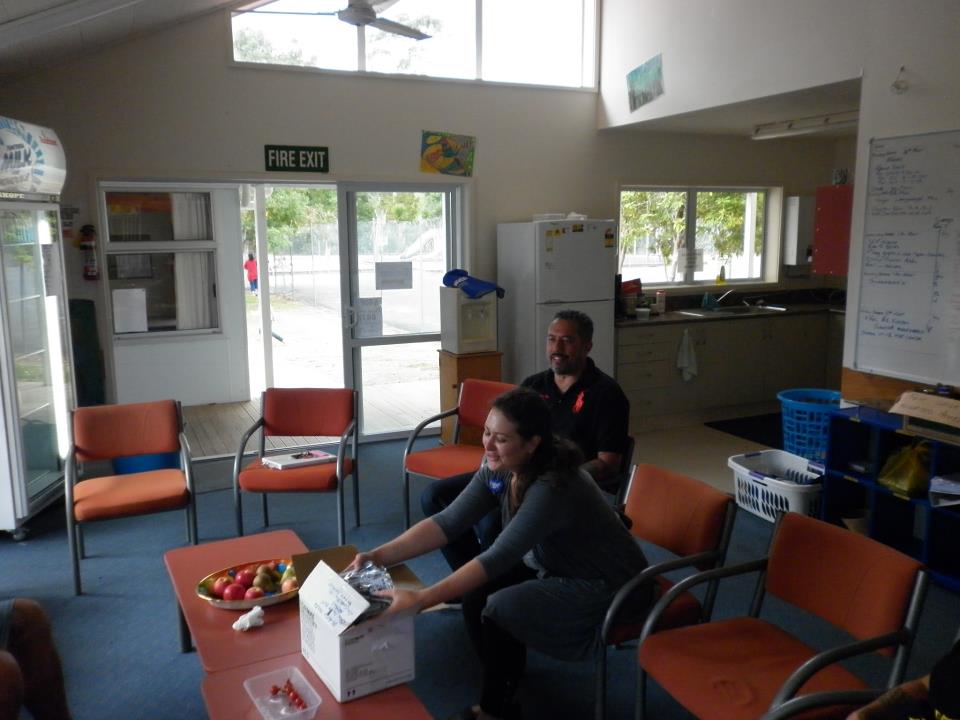
After the last Kaitaia College session on the 6th of March, before they began the long drive back to Auckland, Miriam and Mike made a special after-school visit to Pamapuria Primary (pictured here) with a box of Skylight books for the kids who have experienced trauma there recently .  

So that’s 2 days and over 1 000 people who are ready to lead the changes needed to reach the zero suicide rate that is Key to Life Charitable Trust’s goal and make recovery easier, just like Engage Aotearoa is trying to do.

Discussions are underway to bring the talk to other towns in the Far North in the coming months. Engage Aotearoa has provided schools with follow-up activities for their classrooms and evaluations are currently underway.

Many thanks to Mike King of The Key to Life Charitable Trust, Kevin, BJ, Paulette, Ellen and everybody at Te Runanga o Te Rarawa, Mental Health Commissioner Lynne Lane, Bice and co at Skylight, Ivan at the Mental Health Foundation of NZ, The Beachcomber, Fathers Against Suicide, Kaitaia College, Taipa Area School and all the other people who helped us to pull this together so quickly and so well.

More photo’s coming soon.

Changes to Immigration Requirements

In November 2012, the Government introduced a number of changes to its immigration requirements, including health screening. The effect is likely to be that some disabled people with high-cost support needs who may have been able to come to live in New Zealand now may not be able to. The list of high-cost health conditions has been expanded to include severe developmental disorders or severe cognitive impairments where significant support is required, including intellectual disability, autistic spectrum disorders (ASD), and brain injury. Applicants who do not meet immigration health requirements may be considered for a medical waiver if they meet certain criteria (for example, have a close family connection) provided they meet all other requirements for approval.

For further information go to: www.immigration.govt.nz/migrant/general/generalinformation/qanda/healthqa.htm

Funded New Zealand Sign Language Interpreters for Deaf Parents

The Ministry of Education is now funding New Zealand Sign Language Interpreters for Deaf parents so they can contribute and participate in their children’s core education activities while their children are attending primary and secondary school.

This service covers:

  • formal parent-teacher meetings
  • Individual Education Plan meetings
  • attendance at prize giving/special assemblies
  • attendance at any additional meetings with school staff where any aspect of a child’s education is being discussed
  • attendance at school enrolment meetings.

For information about the service go to: http://www.isign.co.nz/services/funding, or contact Carolyn Grace, phone 04 463 8953 or email carolyn.grace@minedu.govt.nz .

Controversy After Lifehack Launched: New Youth E-Health Project

The Ministry of Social Development launched a new youth mental-health initiative on the 28th of Feb – a youth-led e-health project.

Life Hack says they are “assembling a crack team of hipsters, hackers and hustlers…” Called Lifehackers. “The Mavericks and trailblazers, who don’t let a hurdle stop them, the ones who make things happen.” “…Together they’ll use their sweet skills to create new technologies and media solutions to tackle young New Zealanders’ mental health issues head on.”

Explore the newly launched Lifehack Website to find out more about the project and how youth can get involved.

In Lifehack: the youth mental wellness answer or a well-meaning quick fix? diversity consultant Philip Patston describes Lifehack as “a technology incubater run by (my words) well-meaning happiness evangelists and tech geeks, hell-bent on the idea that the answer to better youth mental health is to play more, say, “Yahoo!” and download an app.” He goes on to post two videos that reveal the Life Hack ad bears striking similarities to a Coca Cola ad, sharing unrealistic images of perfect bodies having sun-filled fun.

Comments on Facebook question the wisdom of investing so much money in a project that only some youth will directly participate in, instead of addressing the funding shortages in the primary mental-health sector. Others question the approach of gathering happy, successful people to tell other kids how to be happy, rather than seeking out youth with lived experiences and empowering them to lead the charge.  One person suggests “as far as i know and i have yrs of experience w mental health issues, assistance and understanding, the best thing for people is tailored to individuals first of all, works with people who trust each other and rarely does any technology take the place of another well-trained, decent human being.

Engage Aotearoa director, Miriam Larsen-Barr, comments “E-resources can be really useful, but in my opinion we really need more on-the-ground resources at the moment, more access to therapy and real-life support. Hopefully Lifehack can attract the right kind of young people with genuine intention, who are able to create something that has a life beyond the web. Computers really can’t replace human contact, meaning and belonging. That’s why all of our e-resources are designed to help people engage with their communities and support options.

Lifehack needs young people who have experienced mental-health problems to get involved and make sure that the initiative goes in the right direction!

No. 128: Ask Someone to Listen

This week, to attain, maintain or regain my sense of wellbeing… Coping Kete…I will practice expressing myself and getting support by telling someone I trust that I’ d like someone to talk to and asking them if they can listen. This is something we pretty much all need to do when the going gets tough, but which can be really hard to do if we are distressed and out of practice. This week, at the end of each day, I will call or visit someone and ask them if they can lend me an ear so I can get some of the day’ s stress off my chest. Then I’ ll tell them a bit about my day and anything stressful that has stuck with me. By checking in with them about their day as well, I’ ll be able to help them leave the conversation feeling listened to as well. This might bring us closer. Sometimes it can help to let people know what we are up to – I might even tell some of my friends that I am practicing asking for help and talking about my problems and that they might hear from me as I go. Once I am comfortable asking someone to listen, I will add it to my Personal Coping Kete as a way of coping in times of distress. I will be used to talking to people about small stresses and I will be used to reaching out, so it will be easier to do.
Far North Services Added to Community Resources Directory

Mental-health recovery resources from the Far North were added to most sections of the Community Resources Directory on the Engage Aotearoa website on the 1st of March.

The directory is now nearly 70-pages long and the Far North sub-sections include services from Whangarei, Kerikeri, Kaikohe, Dargaville, Kawakawa and Kaitaia that can be used to promote recovery, including creative connections, psychologists and counsellors, support services and more. 

If you spot something missing or have information to fill in the many gaps, please get in touch.

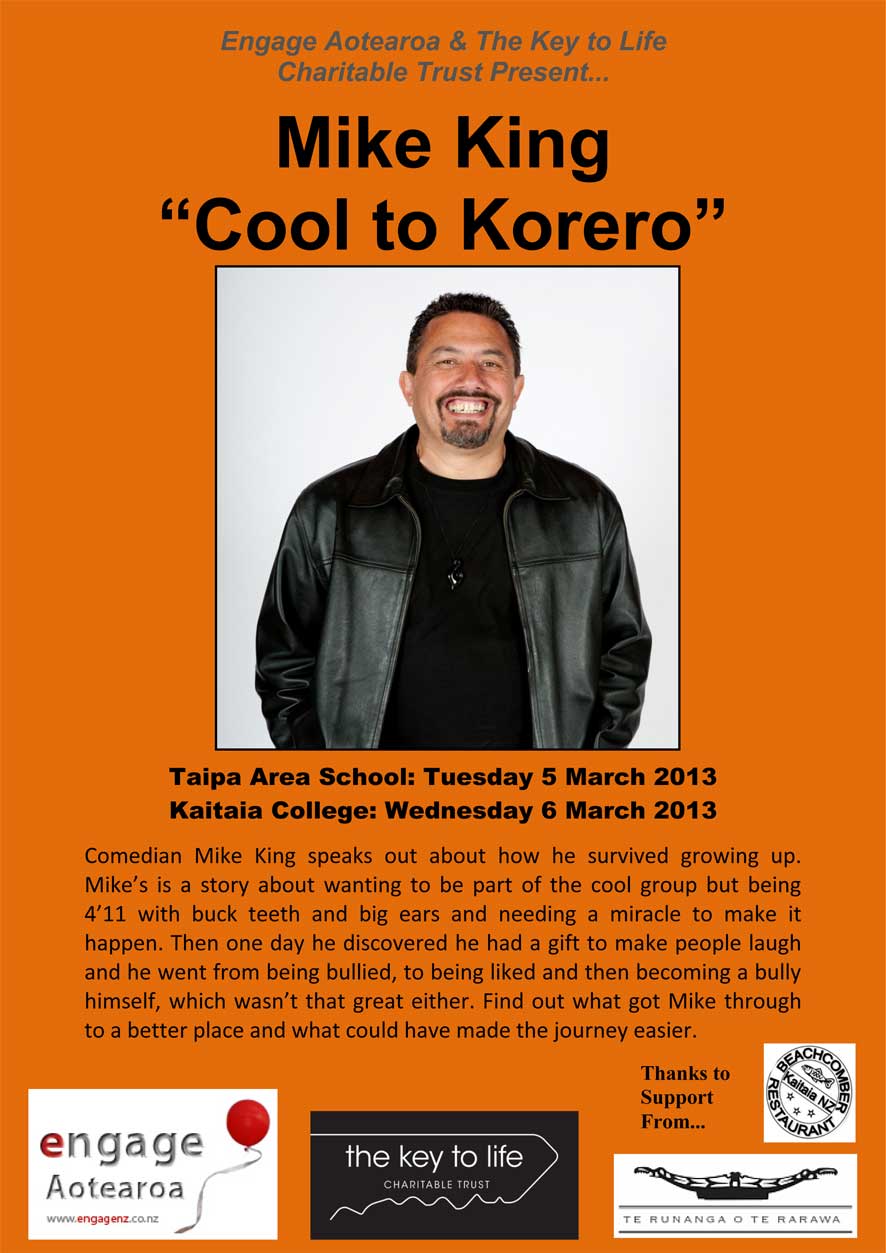
Mike King: Cool to Korero at Far North Schools 5 & 6 March 2013

Engage Aotearoa and The Key to Life Charitable Trust have organised an opportunity for every high school student in and around Kaitaia to attend a special session with Mike King called Cool to Korero. The focus is on developing supportive school communities and a culture where it is okay to ask for help. The overall aim is to prevent further suicides in the Far North.

  • Taipa Area School, 1pm – 3pm, Tuesday 5th of March
    • Open to senior students and parents from surrounding schools by prior arrangement with Taipa Area School
  • Kaitaia College, Wednesday 6th of March
    • Open to year 9-13 students from surrounding schools by prior arrangement with Kaitaia College
    • Morning Session: 9 am – 11 am (For all year 9 and 10 students)
    • Afternoon Session: 11:25 am – 1:25 pm (For all year 11, 12 and 13 students)

CoolToKoreroPosterV1

Many thanks to Mental Health Commissioner Lynne Lane, who heard of the project and arranged funding to allow Skylight to send boxes of resources to gift to the community.

Lane says, “It is important that everyone has a better understanding of how to develop the resilience to cope with the challenges that life holds. We also need to learn how to recognise when someone is struggling to cope with life and to know what to do to support them on the path to recovery.  It is important  to know the early signs of when someone is developing problems, so that they can get help and avoid becoming seriously unwell.  We are all much better informed about how to keep our hearts healthy and how to avoid having a “heart attack”  (healthy eating and exercise etc) and now we need to learn how to keep ourselves mentally well and what to do if someone we care about  is  having problems.

Mike King’s Community Korero will take place at Te Ahu on Tuesday March 5th from 6 to 8 pm and is open to the whole community.

Read The Northern Advocate’s February 28th newspaper article here: An Audience with the King